



Selection help: Molded pulp selection guide · Sample checks
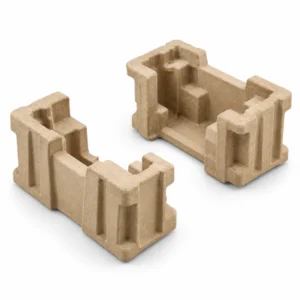
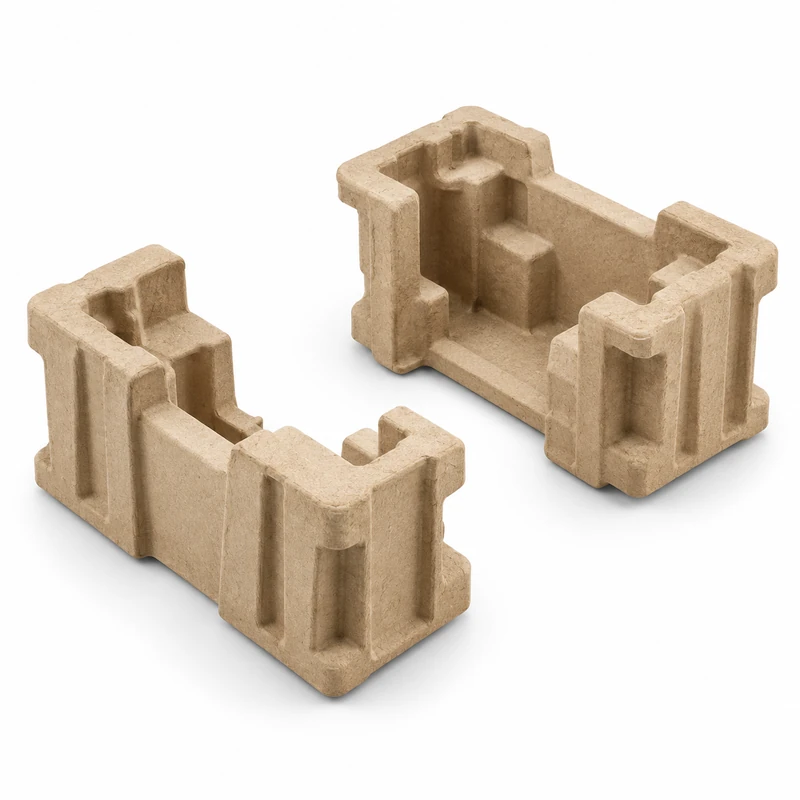
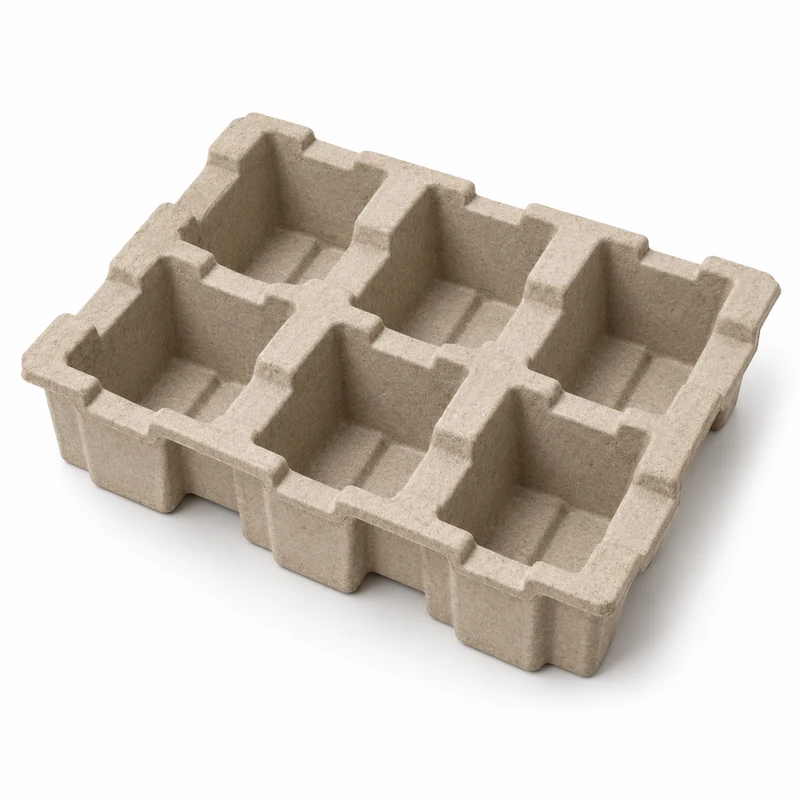
Molded pulp protective trays arrange components in dedicated cavities so parts stay separated during packing, assembly, storage or shipment. For industrial programs, tray geometry needs to match the part and the packaging system around it. A reference sample or part drawing is the starting point; final fit should be approved with a physical sample.
Plan the tray around the part
Send the part dimensions, weight, material and the surfaces that must remain clean or free from marks. Note any fragile edges, protrusions, assembly orientation and the way operators load and remove each unit. These details help define the cavity profile, support points, retention, finger access and the distance between parts. A tray that fits one component may not suit a related model with a different tolerance or finish.
Fit within the complete pack
Tray height, nesting direction and stack count affect the inner carton and the outer case. Provide the carton dimensions, required number of parts per pack, pallet pattern and handling steps. If a tray will be used on an assembly line, include the line orientation and access needed for manual or automated loading. Transport performance depends on the complete package and route; it should be evaluated using the buyer’s test plan.
Information for a B2B quotation
| Especificación | Details to share |
|---|---|
| Component | Part drawing or sample, dimensions, weight, material and model range |
| Cavity design | Part orientation, cavity count, support points, clearances and removal access |
| Surface contact | Areas sensitive to abrasion, pressure, dust, moisture or visible marking |
| Tray format | Overall footprint, rim profile, nesting direction, stack height and parts per tray |
| Pack system | Inner and outer carton dimensions, inserts, pack quantity and pallet arrangement |
| Order plan | Trial and repeat quantity, destination, required sample date and document needs |
What to check on a sample
Load and remove the actual parts using the intended sequence. Confirm that components sit in the planned orientation, do not shift into one another, and can be removed without damaging a sensitive surface. Stack the trays and check how they nest, then assemble the full pack with its carton and any other protection. Record the approved part version, tray drawing, packing method and any agreed inspection points for repeat orders.
Questions from industrial packaging buyers
Can one tray be used for several part models?
Possibly, if the dimensional range, support points and contact surfaces are compatible. Review each model against a sample rather than assuming that a shared outside size means a shared cavity.
What should I send before tooling or sampling?
A 2D drawing or physical part, target tray layout, pack quantity, outer carton dimensions and any surface protection requirements. Photos can support the review but do not replace measurements or a sample check.
Does a sample tray confirm shipping performance?
No. It confirms fit and handling for the sample review. Validate the complete tray, carton, load and transport route against your internal or customer test requirements.
Send an industrial packaging brief o request a sample review. For combined protection, see honeycomb paper cushioning, corrugated shipping boxes y product documentation.