

 English
 Deutsch
 Français
 Español
 العربية
ARBONYXPACK · Cutlery and meal use
Cutlery needs to work with the meal it accompanies. Length, shape, surface finish and strength affect eating comfort and handling. Compare the actual utensil rather than choosing solely from a material label.
List the tasks
Identify whether the meal needs cutting, scooping, spearing or stirring. Give the food type and temperature, along with the container depth. A spoon for a deep food pot and a fork for a main meal may need different dimensions and shapes.
Try the complete meal
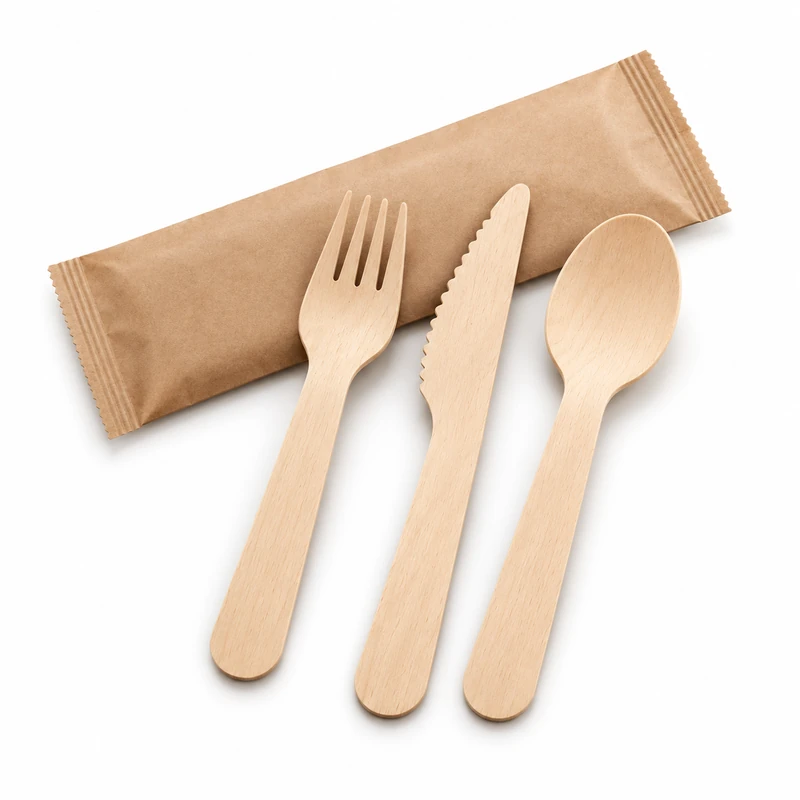
Use sample utensils with the normal food and serving pack. Observe grip, surface finish, flexibility and practical cutting or scooping. Wooden utensils should be checked for surface condition; any alternative material needs the appropriate application specification.
Specify a set or individual items
Name the required fork, knife, spoon, stirrer and napkin, with lengths or references. Decide whether they are bulk-packed, individually wrapped or assembled in sets. Wrapping and set contents belong in the quotation because they change the supplied unit.
Keep the accepted construction
Record the material, dimensions, finish and approved sample. Include the relevant food-contact documents and carton quantities for the chosen item. Review a different shape or material as a product change rather than an automatic substitute.